
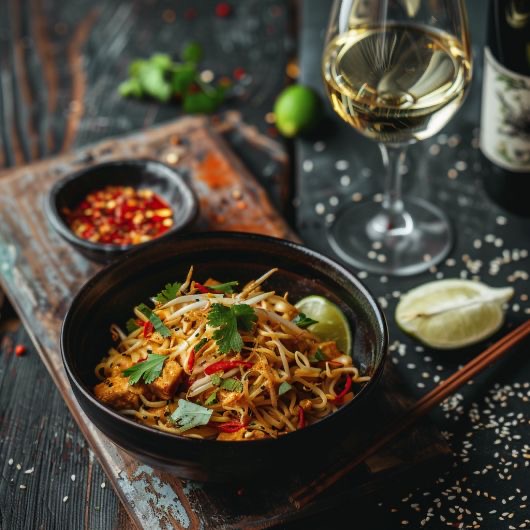
Matching wines with Asian dishes can be very complicated because there hasn’t been a history of Asian cuisine evolving with wine. Yet the successful pairing of wine with Asian food is not an obscure undertaking. Here are some basic rules :
RED WINES
- Tannic wines like oily and rich dishes as the tannins bind with fat and protein.
- Do not pair tannic wines with bitter ingredients.
- Tannin is the worst enemy of spice. Tannic wine reacts badly with chillis and heavily spiced (cardamom, cinnamon, star anise, cumin, turmeric) dishes. It intensifies the feeling of heat on the palate.
- Do not pair high alcohol wines (above 13.5%) with spiciness. Wines with high alcohol content can exacerbate the heat in the mouth. Chilli contains capsaicin which is the source of burning sensation. Alcohol can spread the chili sensations around the mouth, making everything taste hotter.
WHITE WINES
- Match very salty dishes with high acidity white wines. The wines take on contrasting role. They can highlight the savoury taste of food. Salt in food pushes the taste whilst acid pulls taste – hence a balance is achieved when tangy wine is served with a salty dish.
- Match crisp with crisp. Fried food pairs well with crisp white wines.
- Rich, fatty foods work well with dry white wines. The acidity cuts through the oil and cleanse the palate.
SPARKLING WINES
- Match hot soups with lightly sweet bubbles. The inherent sweetness in the wines coats the tongue and soothing hot sensations.
- Sparkling wines also pair well with crispy fried food.
LET ONE TAKE THE LEAD
Do not match subtle tastes with a wine that is intensely flavoured and big bodied, simple and light wine alongside lets the food tastes shine. Conversely, complement an expensive, fine, well-matured complex wine with a simple dish so that the wine takes the limelight.
If you want a versatile wine to suit different tastes around the table, pick a simple wine that has bright fruit, good acidity and relatively low tannin. Remember that the complex wines would lose against the complex flavours of Thai food.
FRENCH WINE RECOMMENDATIONS FOR THAI CUISINE
Provence Rosé or Clairette de Die
These are the best flexible wines. It can take up with various food types and flavours. It works well with white meats and seafood and doesn’t complain when asked to accompany red meats. It handles spices incredibly well as well as herb and aromatics.
Crozes-Hermitage or Cornas
Barbecue food’s smoky aroma and rustic, savoury flavours form an affinity with the peppery notes of Northern Rhône Syrah. Theses inky and tarry wines transcend the flavour of the hot grill to make a robust liaison with the dish.
Condrieu or oaked Pouilly-Fuissé
Savoury Thai dishes can have a predominant sweet taste. Condrieu or Pouilly Fuissé with some weight and relatively higher alcohol simply glides over the tongue to make its union with the dish. They are also great with green curry because the wine has the same textural thickness as the curry weight. The buttery notes from oak aging respond to the coconut milk in the curry without competing it.
Beaujolais or Côtes du Rhône
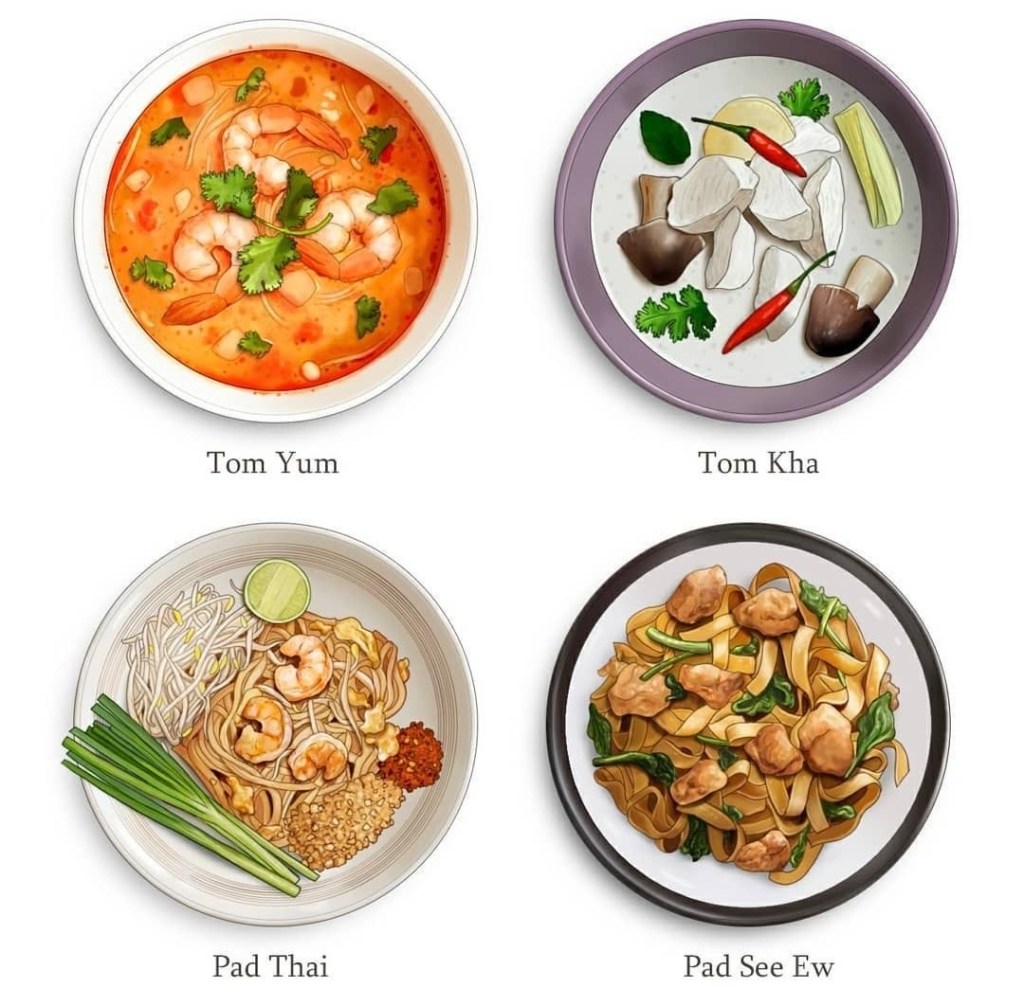
Juicy, fruit driven red wines pair very well with meat stir-fry and red curry such as Pad Thai and Red Duck Curry.
Sancerre, Petit Chablis or Muscadet
The iodine in raw crustaceans has and affinity for young wines that are tangy and extremely dry. These wines match nicely with dishes such as Tod Man Pla (Thai fish cake) and Som Tum (Thai papaya salad)
Bourgogne Aligoté, Picpoul de Pinet or Quincy
These wines are great with sour dish – light, crisp and tart. As long as the wine tastes sharper than sour agent in the food, it will never fall flat.
Off-dry Riesling or Pinot Gris
Lightly sweet wines can match most savoury dishes by complementing the spices and muting any chilli piquancy. Sweet wines will also balance and match any bitterness in food.
 THEFINEWINE